The Gift of Co-Writing: A High Holy Day Sermon Partnership
August 27, 2026
By:
MTEI
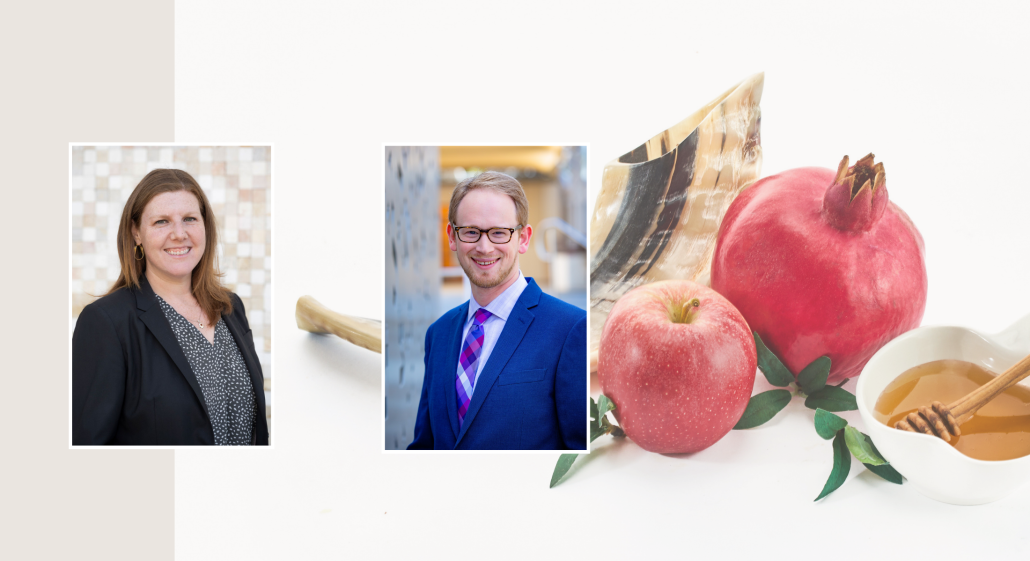
For most rabbis, preparing a High Holy Day sermon is a solitary task. For Rabbi Julie Bressler of Congregation Ner Tamid in Las Vegas and Rabbi Eric Rosenstein of Temple Judea in Los Angeles, it has become a collaborative practice rooted in friendship, trust and shared learning.
Julie and Eric earned their Master of Arts in Jewish Education in 2017 and were ordained by Hebrew Union College in Los Angeles in 2019. While serving student pulpits during rabbinical school, they began co-writing Rosh Hashanah sermons, a practice and partnership that has continued ever since.
After ordination, the two rabbis continued meeting weekly as havruta partners, engaging in the Jewish practice of collaborative learning through dialogue, reflection and mutual inquiry. Encouraged by professors and classmates to maintain the relationships they had built in rabbinical school, they placed a recurring weekly meeting on their calendars and have continued it ever since.
In late spring or early summer, they begin discussing ideas based on current events and issues affecting their congregations. As the holidays approach, they devote additional time to brainstorming, reading together when relevant, developing an outline and drafting sections of the sermon. They write both independently and collaboratively, combining their work into a shared draft that is revised over several weeks.
In the final stages, each rabbi adapts the sermon for their own congregation through personal stories and language choices. Even with those individual touches, Julie estimates that the two rabbis ultimately deliver sermons that are about 90% the same.
For Julie, the process demonstrates the value of collaborative practice. Co-writing with a trusted colleague provides both intellectual partnership and emotional support, particularly when addressing difficult topics during challenging times. Their partnership has spanned a period marked by significant communal and societal challenges, from California wildfires to the national reckoning following George Floyd’s murder and the aftermath of the October 7 attacks on Israel. “We trust one another, so we felt more confident delivering these words to our communities, knowing that someone we deeply trust also created and supports the message,” she said.
Throughout those years, they have continued to support one another as colleagues and thought partners, both participating in the Mandel Teacher Educator Institute (MTEI) in different cohorts and reflecting on their experiences in the program. Eric describes their partnership as “the kind of deep, collaborative relationship that affirms everything that MTEI reminds us about slowing down, clarifying our thinking, reflecting across a text, and practicing our communication.”
In many ways, their High Holy Day sermons are an extension of the havruta itself. What began as a collaborative writing partnership has evolved into an ongoing practice of dialogue, reflection and mutual inquiry — one that continues to shape how they serve their congregations and develop as Jewish educational leaders.